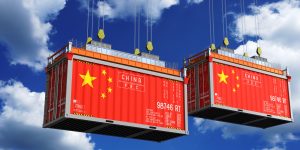
How Dual Sourcing Protects Your Supply Chain & Reduces Cost Risk
For many companies, procurement has historically focused on cost efficiency through supplier consolidation. Concentrating spend with one supplier can simplify management and improve short-term pricing leverage. But in today’s volatile global environment, relying too heavily on a single supplier or sourcing region can create major operational vulnerabilities.
From logistics bottlenecks and tariff volatility to geopolitical conflict and factory shutdowns, recent disruptions have proven that single-source dependency often increases long-term cost risk—even when initial unit pricing appears favorable.
This is why dual sourcing and multi-sourcing have become essential strategies for procurement leaders seeking both resilience and profitability. By creating alternative supply pathways, companies can reduce disruption exposure, improve supplier performance, and lower total cost of ownership (TCO).
What Is Dual Sourcing—and Why Does It Matter More Now?
Dual sourcing involves qualifying at least two suppliers for the same component, product, or category. These suppliers are often located in different regions to reduce geographic concentration risk. Multi-sourcing expands this approach by diversifying across several suppliers or countries.
The objective is simple: if one source becomes disrupted, another can maintain continuity.
According to research published in the Atlantic Economic Journal on dual sourcing and resilient supply chains, dual sourcing can significantly reduce switching costs and improve resilience in environments affected by geopolitical or supply instability.
In modern procurement, dual sourcing is no longer a backup plan—it is increasingly a core risk management strategy.
Real-World Scenario: Logistics Disruption and Regional Flexibility
Recent freight crises demonstrated how overdependence on one region can quickly escalate costs.
Companies sourcing solely from one country often faced delayed shipments, container shortages, and major freight spikes. In contrast, businesses with diversified sourcing across Asia and Latin America were able to shift order volumes strategically to reduce lead time disruptions.
For example, manufacturers balancing sourcing between China and Vietnam—or India and Mexico—gained flexibility when regional congestion affected one route more heavily than another.
As highlighted by C.H. Robinson’s dual sourcing strategy analysis, businesses that establish secondary supply pathways can often stabilize operations faster and avoid expensive production downtime.
This is a critical lesson: procurement cost is not just what you pay suppliers—it is also what disruption costs your business.
How Dual Sourcing Reduces Total Cost of Ownership
At first glance, managing multiple suppliers may appear more expensive. However, procurement leaders increasingly recognize that piece price alone is an incomplete metric.
Dual sourcing often reduces TCO by protecting against:
- Production stoppages
- Emergency freight premiums
- Tariff shifts
- Capacity shortages
- Supplier negotiation imbalances
- Quality variability
For example, a slightly higher secondary supplier cost may be far less expensive than weeks of lost production caused by sole-source disruption.
Research from GEP’s dual sourcing strategy insights reinforces that supplier diversification often strengthens both resilience and procurement leverage simultaneously.
Supplier Competition Improves Cost and Performance Discipline
Dual sourcing does more than create backup—it can also improve supplier accountability.
When suppliers know they are competing for volume allocation, they are often more motivated to:
- Maintain pricing competitiveness
- Improve delivery consistency
- Strengthen responsiveness
- Increase quality standards
This competitive dynamic can reduce complacency and create measurable procurement advantages.
Combined with structured supplier scorecards—as discussed in our broader procurement strategy insights on the EDS blog
👉 https://eds-international.com/blog/
dual sourcing can become both a resilience tool and a performance improvement strategy.
Avoiding the Biggest Dual Sourcing Mistake: False Diversification
Not all dual sourcing reduces risk equally.
A common mistake is sourcing from two suppliers that share hidden upstream dependencies—such as the same Tier 2 supplier, logistics corridor, or raw material source. This creates the illusion of diversification while preserving concentrated risk.
Effective dual sourcing requires:
- Geographic separation
- Independent logistics routes
- Distinct upstream material sources
- Separate capacity constraints
As supply chain resilience experts increasingly emphasize, true diversification must go beyond Tier 1 suppliers.
When Dual Sourcing Makes the Most Sense
Dual sourcing is particularly valuable for:
High-risk components: Parts critical to production continuity
High-volatility markets: Categories exposed to geopolitical or tariff shifts
Long lead-time products: Components with limited recovery windows
Strategic categories: Products with high business impact
Single sourcing may still work for specialized, low-risk categories, but critical supply chains increasingly require redundancy.
The smartest procurement strategies balance simplicity with resilience.
How EDS International Supports Dual and Multi-Sourcing Strategies
Building an effective dual sourcing strategy requires more than adding a second supplier—it requires qualification, supplier oversight, quality consistency, and operational coordination.
EDS International helps companies implement practical, cost-effective dual sourcing strategies across China, India, Vietnam, Thailand, and Mexico.
We support clients through:
- Supplier identification and qualification
- Secondary supplier audits
- Factory capability assessments
- Regional diversification planning
- Quality assurance across sourcing regions
- Logistics coordination and continuity management
With on-the-ground teams in key sourcing markets, EDS helps clients diversify intelligently—without sacrificing visibility, control, or quality.
In today’s unpredictable market, dual sourcing is not simply a defensive measure—it is a strategic advantage that protects profitability while strengthening resilience.
EDS International ensures your sourcing strategy is diversified, practical, and performance-driven—making us the best partner for companies seeking stronger global supply chains.